Winter Finches in South Korea
In winter, South Korea’s parks, rice fields and wooded hillslopes come alive with a varied and bustling cast of finches; small birds that color the cold season with flashes of yellow, pink, green and cinnamon. From small groups that rove, chattering through bare branches to the mixed flocks feeding on leftover grains in rice fields and winter berries in parks and gardens, these finches offer an intimate glimpse into the country’s colder months; their movements trace food availability, migration routes and the subtle rhythms of the landscape. Some species are regular visitors in winter, to South Korea, while others are more irruptive arriving when conditions are harsh and there is also a degree of altitudinal movemnet within the country too with snowy conditions in hill forests forcing larger numbers of finches into the lowlands. In this post we’ll discuss the finches that we have encountered on our winter birding tours to South Korea over the years that we have been visiting.
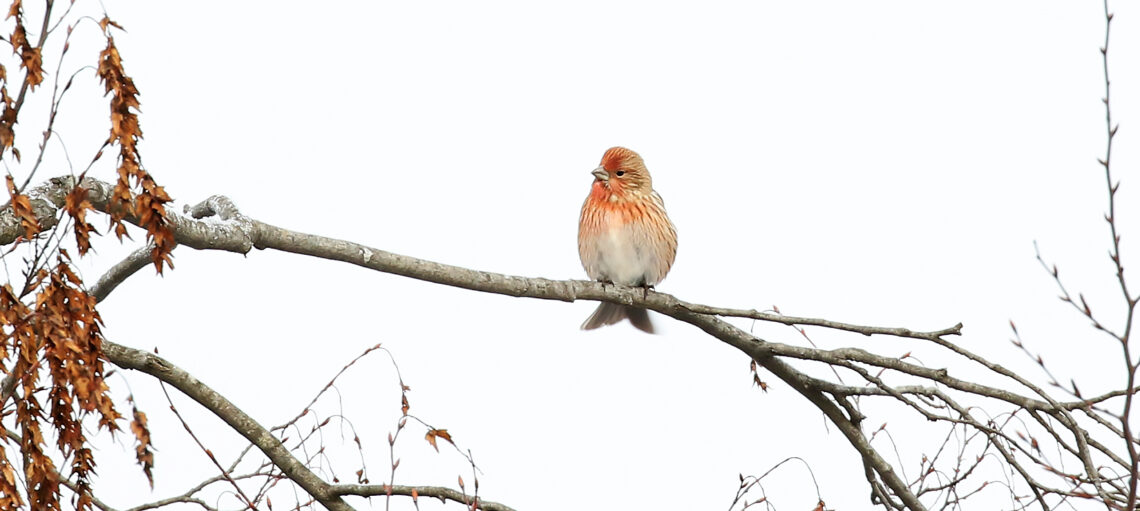
Pallas’s Rosefinch, Carpodacus roseus
The sight of a shining, pink male Pallas’s Rosefinch foraging in the snow is an exciting moment and one that is not quickly forgotten; a treasured observation. This is one of the most anticipated birds on this list for birders visiting South Korea in the winter but it is certainly not one that is always readily found. Breeding across Siberia accessing areas to see this bird in summer is very difficult so the modern infrastructure in a small country like South Korea makes many areas accessible. However, pinning down exactly where Pallas’s Rosefinches are going to be in any one year can be tricky and, like several of the birds featured here, if there is no snow cover on the wooded hills few descend whereas if there is snow higher up, then they can be found in patches of woodland and woodland egde in the lowlands.
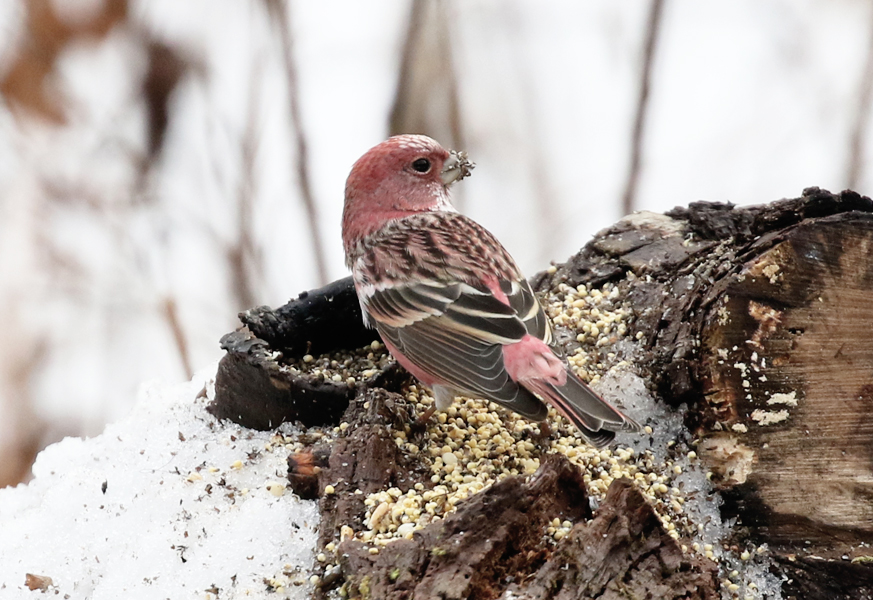
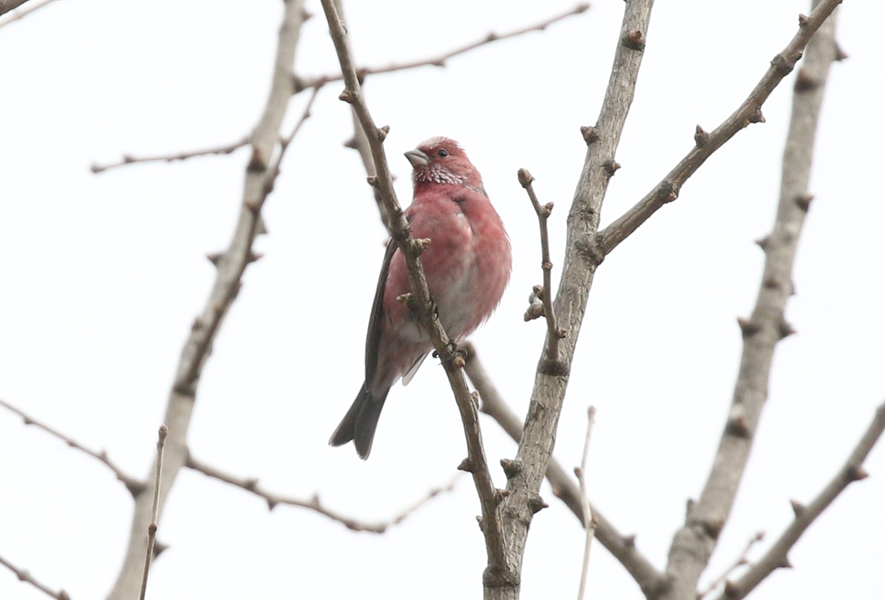
We have seen Pallas’s Rosefinch on about 60% of our Korean winter birding tours and it is a bird we always make an effort to find with banks of trees at White Horse Hill near Cheorwon being the location we have seen it the most frequently, although the best views obtained were at a photographic feeding station at the National Arboretum and as can be seen in one of the photos above, there was a lot of snow on that occasion. When seen as well as this Pallas’s Rosefinch is definitely one of the trip highlight species, although there is always a lot of competition for that.
Oriental Greenfinch, Chloris sinica
Oriental Greenfinch, also known as Grey-capped Greenfinch, is the only bird on this list that can reliably be found in South Korea all year round. Abundant and widespread this species is likely to be seen anywhere throughout the country including in parks and gardens within urban areas. Bringing a splash of colour to winter landscapes Oriental Greenfinch makes for a nice photographic opportunity, their abundance meaning that sooner or later there is a close encounter with them, in good light. On our winter birding tours in Korea this is one of those birds we always see and if you happen to be passing through the country and have a morning for birding, at any time of the year, you are likely to see them.
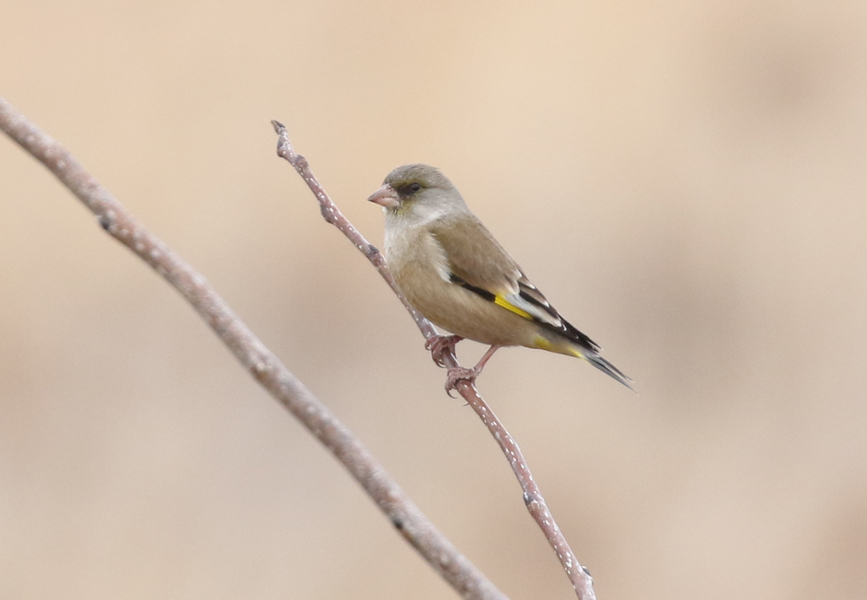
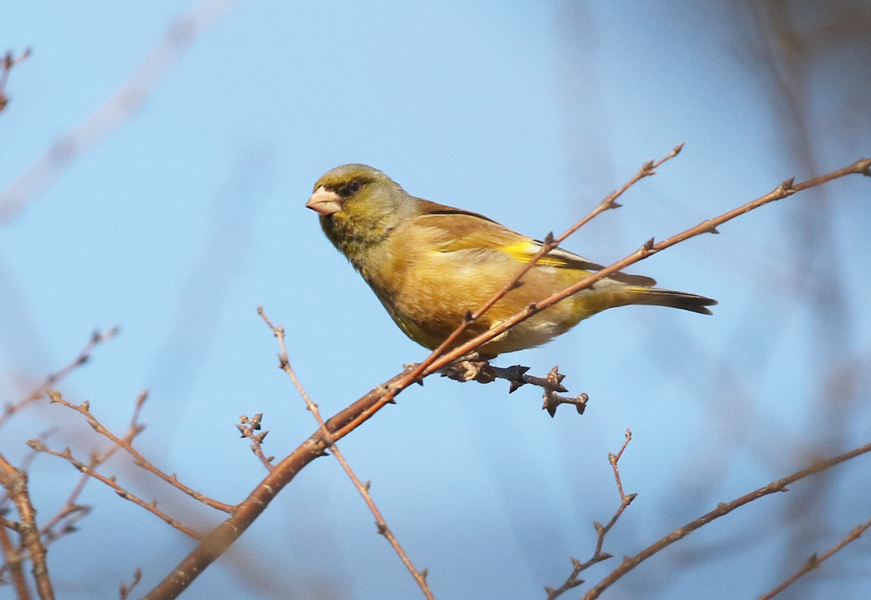
Looking back on previous trips the number of locations at which we have recorded Oriental Greenfinch is very numerous and we are just as likely to see them in the car park of a motorway service station as within a national park or nature reserve. On one trip we saw huge flocks of this species doing some pre-trip birding close to the hotel we use near Icheon International Airport while on another trip it was one of just five species of birds we found on the barren mountain on which we were sucessfully searched for Asian Rosy Finch.
Hawfinch, Coccothraustes coccothraustes
It might surprise many birders to learn that Hawfinch is a common wintering species in South Korea considering that it is often scarce, at best, through much of its range. Although Hawfinch is not one of those birds that people travel to South Korea to see it is a nice addition to the winter avifauna and, in our experience, it is often a lifer for some of our clients. Present in a variety of habitats from woodland, to parks and gardens as well as in copses of trees in wetland areas, this is one of the birds on this list that we have recorded on every one of our winter tours here.
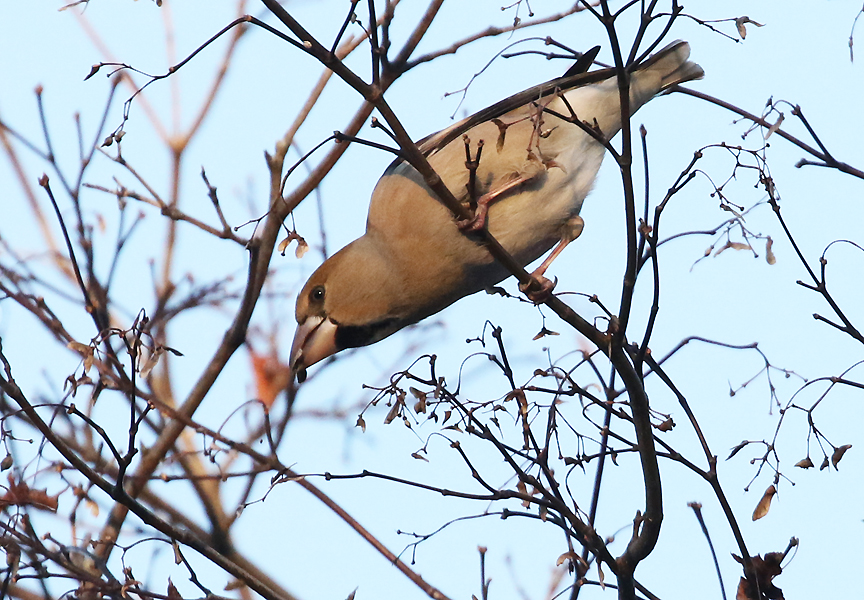
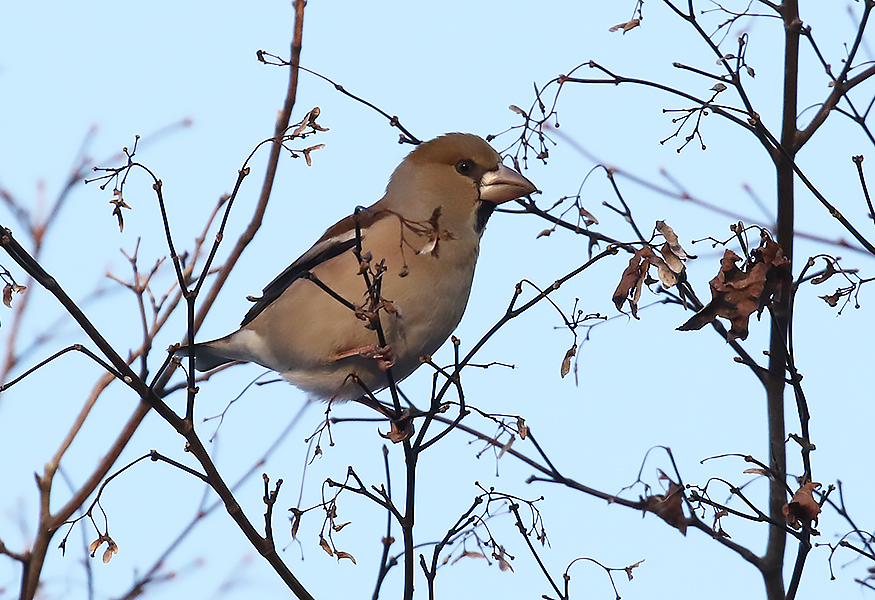
The photographs above were taken in the small park very close to the hotel near Incheon Airport that we use on arrival in South Korea, where we star and finish our birding tours and it can regularly be seen there in small numbers. We have recorded Hawfinch at a lot of different locations around the country, many of them just being random roadside stops along the way, but one location that regularly gives us really good views of this impressive species is the National Arboretum near Seoul. Few birders get to see Hawfinch regularly so it is always a good bird to see and often one of the first species we see on the tour.
Common Crossbill, Loxia curvirostra
Common Crossbill is one of the least recorded birds on this list, in fact we have seen it only on one of our winter trips in 2023, when we saw it at two locations close to the city of Gunsan. Common Crossbill is also known as Red Crossbill and is, obviously, not the rarest bird, globally speaking, featured here but a scarce sighting here and one that is quite exciting for those keeping a South Korean list. Despite the bright colour of the male, this can be a remarkably inconspicuous when feeding on conifer seeds and it is usually first detected by its distinctive “clip, clip” contact call, which is often uttered in flight.
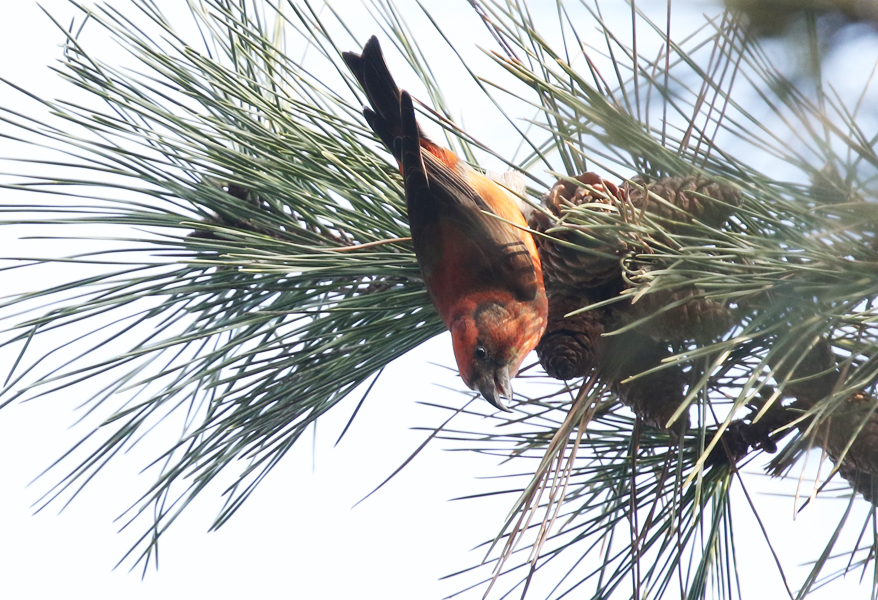
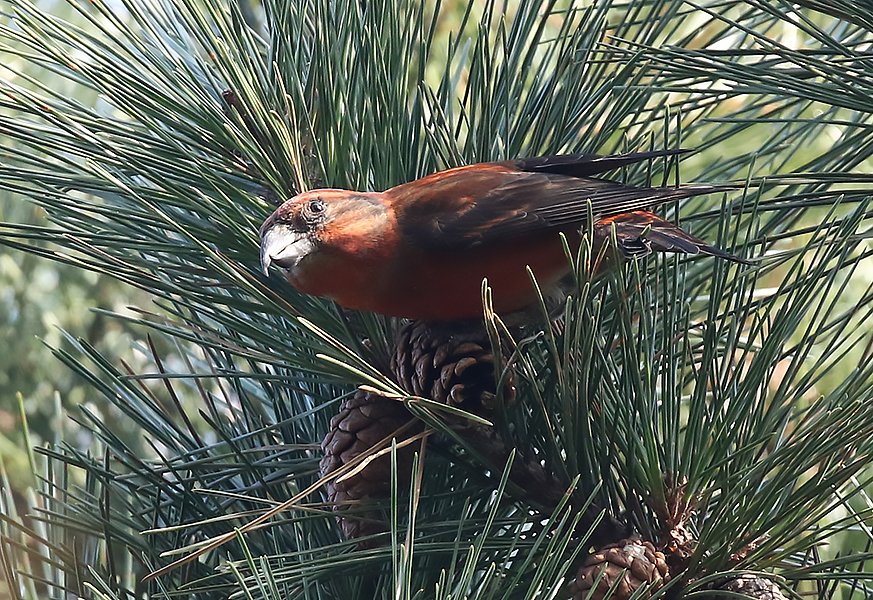
In 2023 we saw flocks of Common Crossbill in wooded parks close to Gunsan city, both on the north and south bank of the Guem Estuary. In this year we were told that there had been an invasion of Crossbills so were on alert for their call everywhere we came across conifers but it wasn’t until quite late in the tour that we came across them. This most certainly is not a species we expect to see when making winter trips to South Korea but a fun one to look out for nevertheless.
Chinese Grosbeak, Eophona migratoria
In an attempt to clarify that this bird is not restricted to China some taxonomic authorities call this species Yellow-billed Grosbeak but I find that name does no more to help identify it and on the new Avi List world bird list they have reverted to Chinese Grosbeak. This is one of those species that while it is present in South Korea every winter, can be irruptive and as such it can be common one year and far less so in another. Just as likely, if perhaps not more likely, to be found in an ornamental park or garden as an area of woodland, the male is a really striking bird when seen clearly. Like many similar species Chinese Grosbeak likes to feed on large seeds or small fruits and this is why a park can be as good a location as any to find this bird in South Korea and, indeed, I have seen them in parks in Beijing, China, in the breeding season too. Perhaps we could offer “Park Grosbeak” as another alternate name just to confuse things a bit more..
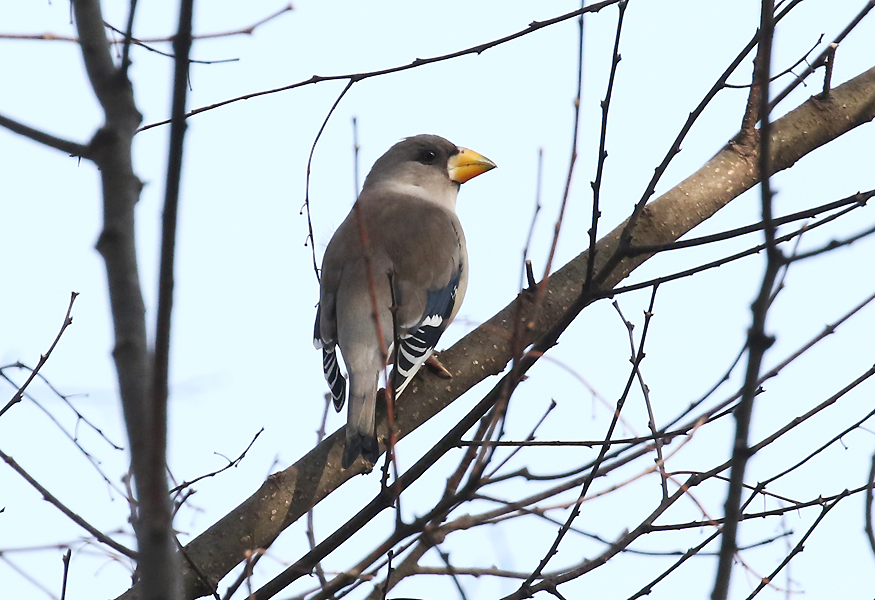
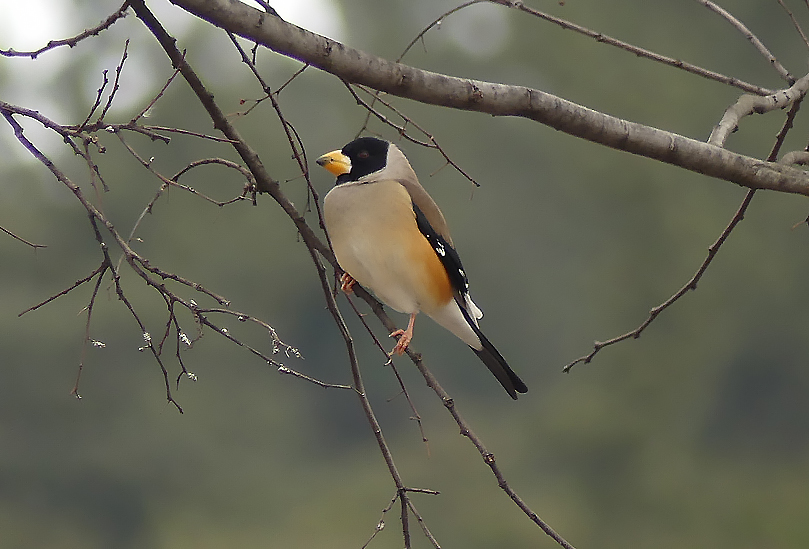
While Chinese Grosbeak is a regular winter visitor to South Korea on our tours there we have found it to be one of the most unpredictable species of passerine having never seen it in the same location more than once over the years, although we almost always find them somewhere along the way. This is one of those birds you just have to get out into habitat and walk around to see what you can find rather than picking any specific target spot. On the first trip to South Korea that I led our only sighting of Chinese Grosbeak was at a set of traffic lights as we entered Busan. I was driving the vehicle and as we waited at a red light I noticed some birds dropping down to the pavement from a roadside tree. A quick look through the binoculars proved that it was a Grosbeak and we then desperately looked for somewhere to pull over so that we could get a proper look at them. The photo above, of the male, was the result.
Asian Rosy Finch, Leucosticte arctoa
With a very limited and scattered breeding range in remote and high mountains of China, Mongolia, Russia and Kazakhstan Asian Rosy Finch is a tricky species for birders to connect with. It most certainly is not a common wintering species in South Korea and one is not likely to just blunder into one without a massive slice of luck but there is one seldom-visited upland location where a flock of 50-80 birds regularly spend the winter. This is a very cold location and finding the birds is not an easy task but we have found them on most visits, scanning the skies and fields for the rolling flock which moves in a very particular way. Feeding on the ground they move along with the birds at the back of the flock taking off and flying the short distance to the front of the flock, giving the overall impression of a single moving entity. When they take off, they do so as a flock and often stay airborne for many minutes, with a lark-like flight pattern.
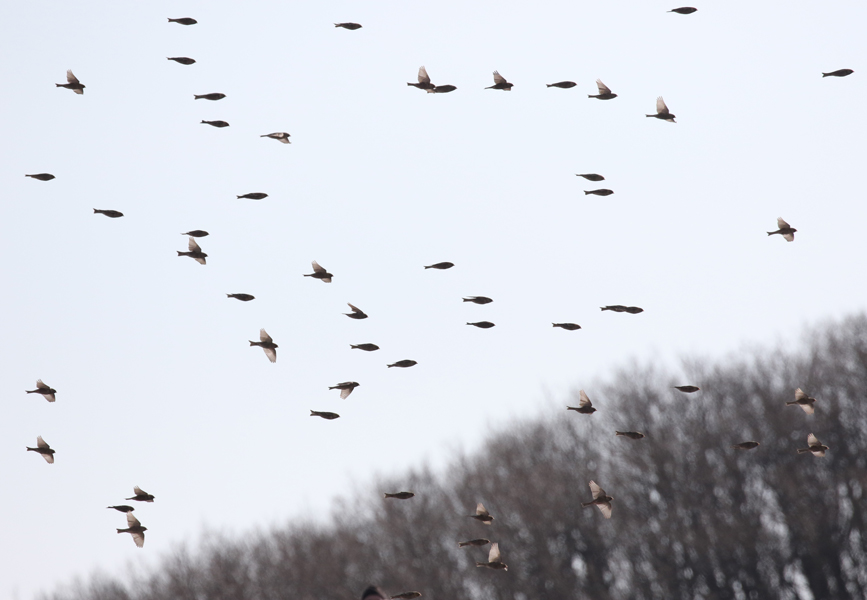
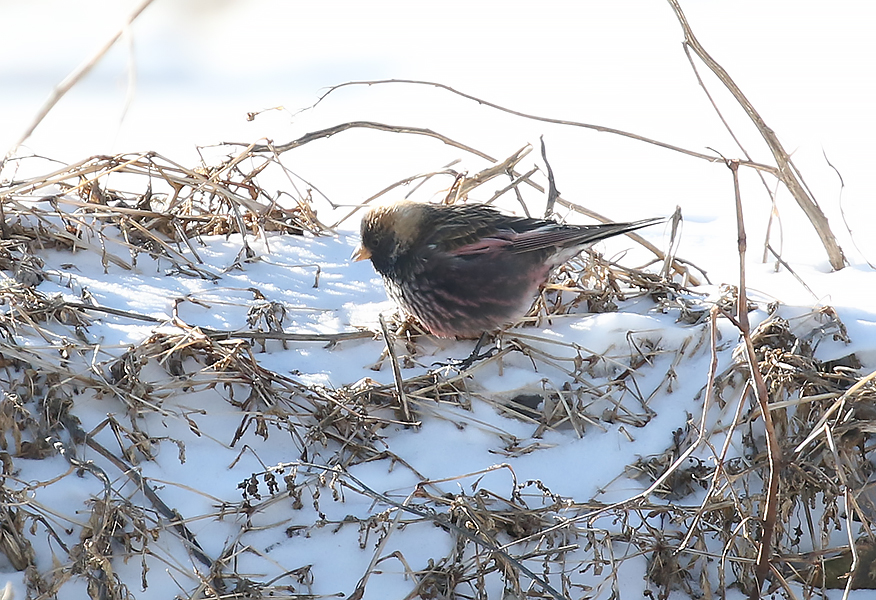
Up in the hills in winter things can be very cold and over the years we have had some memorable moments searching for the Asian Rosy Finches. On one occasion the road was covered in compacted snow and we had to find a parking spot and walk around in the winter wonderland until we located the flock of birds. Another times we stood waiting for the flock in sub-zero temperatures with a strong wind until we had to retreat into the cars to get warm and drive around, eventually finding them this way. On another memorable trip we found the birds close to a road and everybody got out to take some photographs. Many of us sat down to steady ourselves in the wind and after taking hundreds of shots each we virtually ran back to the vehicles to warm up, only to find that all the photographs were blurry due to us shivering! This is a cold place but that’s what it takes to see Asian Rosy Finch in winter in South Korea.
Eurasian Bullfinch, Pyrrhula pyrrhula
Eurasian Bullfinch is a bird that many European birders will be familiar with, although there seem to be few places where it is genuinely a common bird and one that is so striking in appearance is always a welcome sight. In keeping with many other areas within the range of this species, it isn’t very abundant in South Korea in winter and it is usually found in woodland area rather than in hedegrows in farmland or parks, although they can turn up almost anywhere with trees. The subspecies occurring in the Korean peninsula can be confusing and there are perhaps intergrades. It is assumed that the most common subspecies wintering in South Korea is rosacea and the male pictured below is probably a bright-looking individual of this subspecies. Other quite different looking subspecies occur in South Korea more rarely and we are yet to record any others on our trips. This article discusses Bullfinch subspecies wintering in South Korea in more detail – Bullfinches in the ROK.
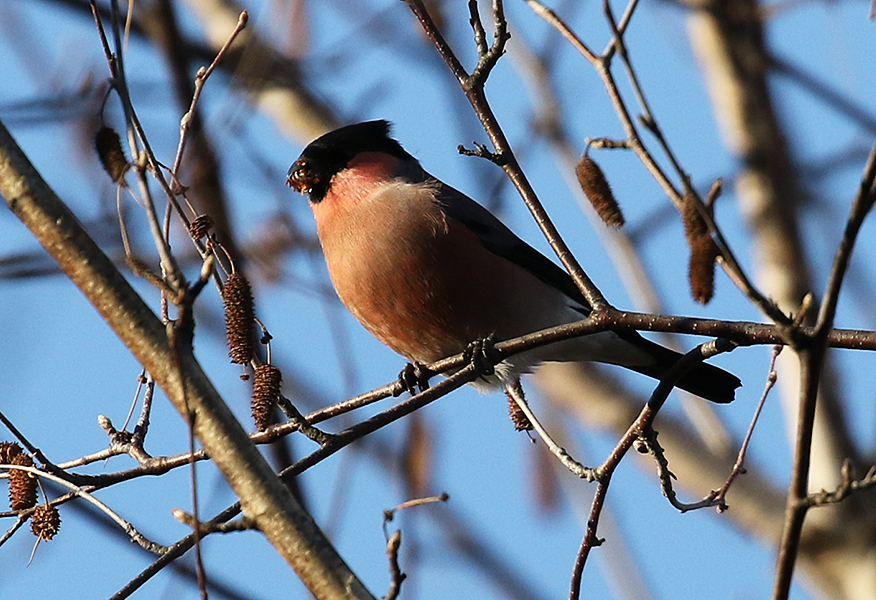
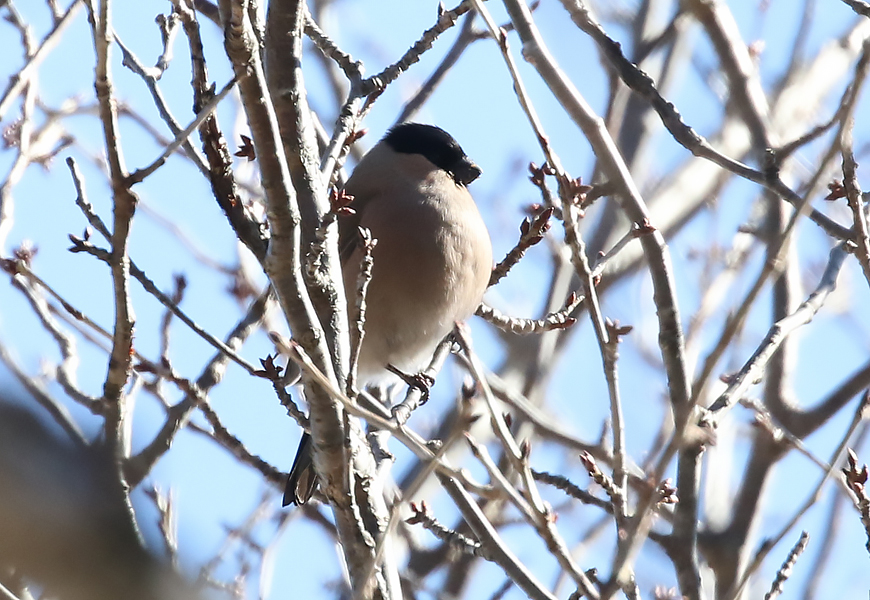
Eurasian Bullfinch is not a bird we have recorded on every one of our birding tours to South Korea in winter, being another one of those species that arrives when the weather conditions are adverse further north. Our records have always been in woodland habitats with the most notable sites being the National Arboretum near Seoul, Namhansanseong Forest Park, a little south of Seoul and the woodlands on the way up to Tabaeksan wind farm. It is one of those birds that is probably not expected but equally can show up ant any woodland area and a nice addition to the trip list. If we were to find a male of the subspecies griseiventris on our next trip it would be a welcome and interesting sighting.
Long-tailed Rosefinch, Carpodacus sibiricus
Finding Long-tailed Rosefinch in South Korea in winter can take some searching as they are never present in great numbers but are scattered widely across the country and as such can turn up anywhere. Breeding further north in parts of China, Mongolia and Russia harsh weather in winter pushes them on a short migration southwards where they occur in scrubby vegetation alongside woodland and forest edge, sometimes individually or in small parties. If the weather is very cold these little birds spend much of their time within thick vegetation but when the wind-winter sunshine comes out they will perch out in the open to gather the warming rays. We never expect to see very many Long-tailed Rosefinches on our winter birding tours to South Korea but we always find them and a nice, pink male is always a highlight.
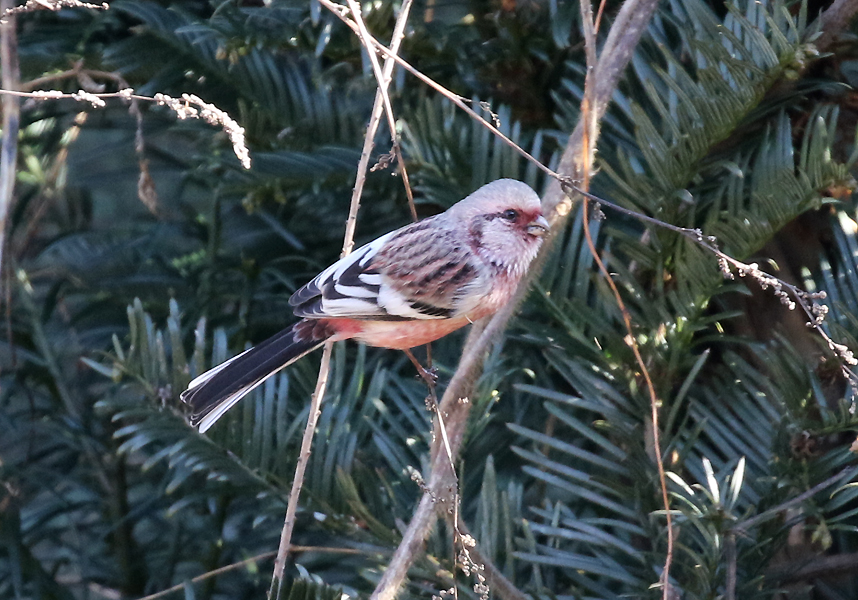
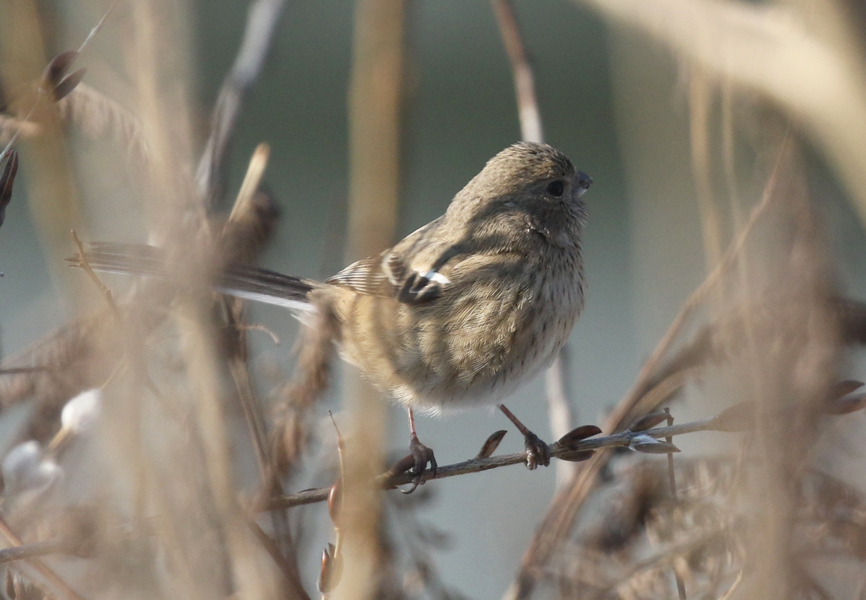
Most of our sightings over the years we have been visiting South Korea, of Long-tailed Rosefinch, have been in the northern part of the country at a variety of sites including several within the urban areas as well as areas of farmland; anywhere there are low, scrubby bushes and tangled vegetation close to water these birds can be found. In some years this species is more obvious than others but their abundance levels do not seem to reflect the weather conditions in South Korea, perhaps it is more dictated by the climate in their breeding range or, maybe, they are more numerous on the Korean peninsula in winter after particularly successful breeding seasons beforehand.
Eurasian Siskin, Spinus spinus
Largely a winter visitor, Eurasian Siskins arrive from their northern breeding grounds and these energetic birds can often be seen feeding on alder, birch, and conifer seeds, sometimes gathering in large, fast-moving flocks. Wherever there are the right species of trees to provide seeds for them to feed on, these joyful little birds can occur often detectable by their soft contact calls uttered to each other as they feed. Just as likely to be seen in parks, gardens and waterside vegetation as tracts of forest Siskins are an annual visitor to South Korea in winter, but how numerous they are can depend on the severity of the season in any one year.
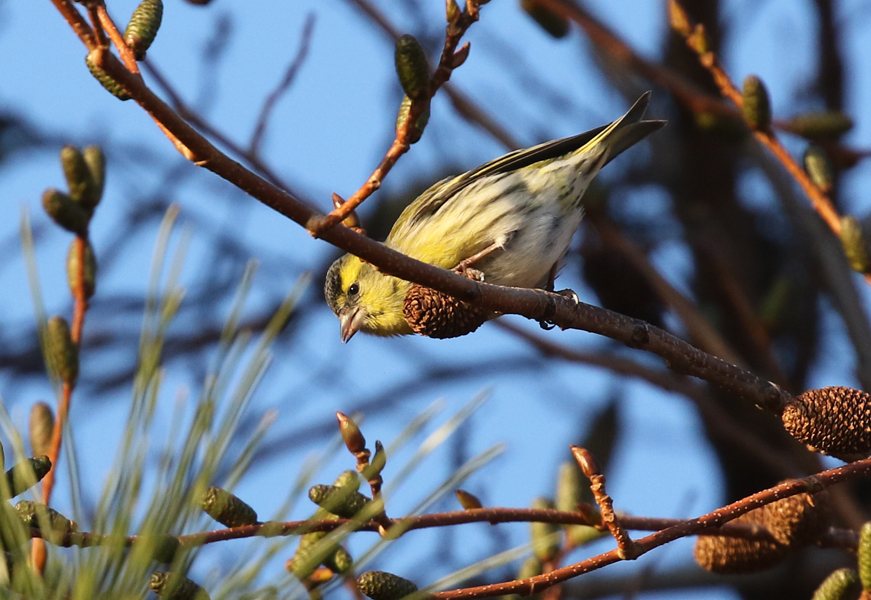
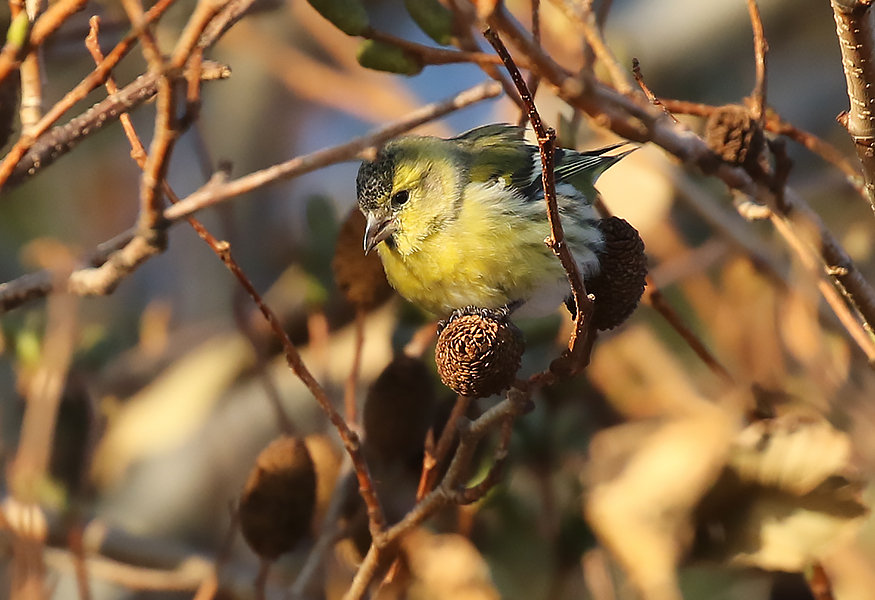
On our winter birding tours to South Korea we have seen Siskins feeding alongside other finches such as Eurasian Bullfinch and Pallas’s Rosefinch, as well as with Varied Tit and Marsh Tit, at the lovely National Arboretum near Seoul. Osik Park, in Gunsan, has also been a good place to see flocks of Eurasian Siskins in January but we have seen them in a wide variety of places including copses of trees around harbours on the east coast and various patches of parkland around the city of Busan. it is one of those birds that can turn up anywhere and although it isn’t one of the species that birders are travelling to Korea specifically to see, they are always a lovely sight wherever we see them.
Brambling, Fringilla montifringilla
There is no doubt about it, Brambling is a really smart bird and another one of those species that is more abundant in South Korea in winter than most birders are used to. It is true that in some years there are large numbers of Brambling present in winter in some parts of Europe but that is almost guaranteed in South Korea and it allows birders to get plenty of close up views and study the species in more detail than perhaps has been possible on other sightings elsewhere. As is similar in most of the range of Brambling they can be found in woodlands, farmland and scrubby areas; anywhere with seeds for them to feast on really.
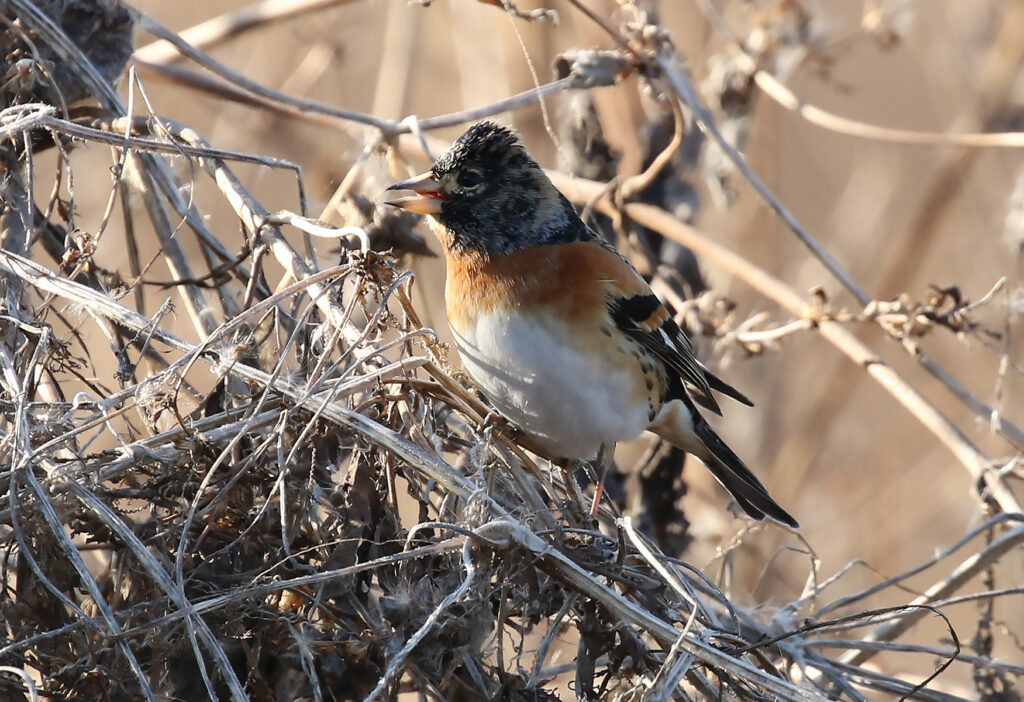
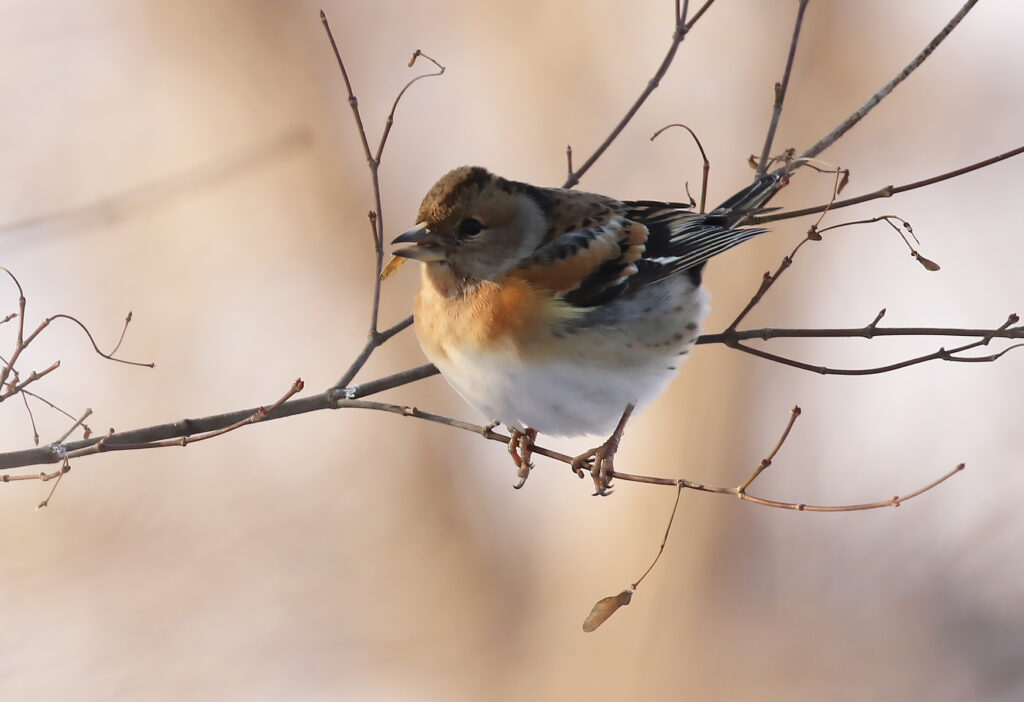
Brambling is a bird that can turn up anywhere in South Korea and often turns up everywhere. While the much-beloved National Arboretum always produces this lovely bird, perhaps the best place to see them is on the unkempt edges of fields where weedy margins and small trees along watercourses border rice stubble. In this habitat they come out into the open to feed on grains and weed seeds allowing birders to get really good, unobscured views in good light. This allows us to appreciate them in full.
If you would like to join us on one of our popular birding trips to South Korea check out the itinerary and details here – South Korea Winter Birding Tour

